PORTER KITS
LOADED PORTER KITS
$50
Get a loaded Porter Kit for the November sale price of $50.
SHOP KITSWorld Diabetes Day research special and our November Specials — explore both offers below.
Research Special — explore three selected products and save on eligible mg vials.
Shop available mg vial options of RT3, SM1 or TP2.
Enter DD1113 in the coupon field at checkout.
Your eligible items receive the promotional discount.
Valid November 13, 2026 only. Applies exclusively to all mg vial options of RT3, SM1 and TP2. Enter DD1113 at checkout. Subject to product availability.
Save on loaded Porter Kits and select 10mg products, or unlock a free Polished by Porter serum.
Get a loaded Porter Kit for the November sale price of $50.
SHOP KITS →Save 15% on both qualifying 10mg products.
Spend $100 or more on Polished products and receive a free Hyaluronic Acid Serum.
SHOP POLISHED →Offers are subject to availability. The free serum is added automatically when the qualifying Polished subtotal reaches $100.
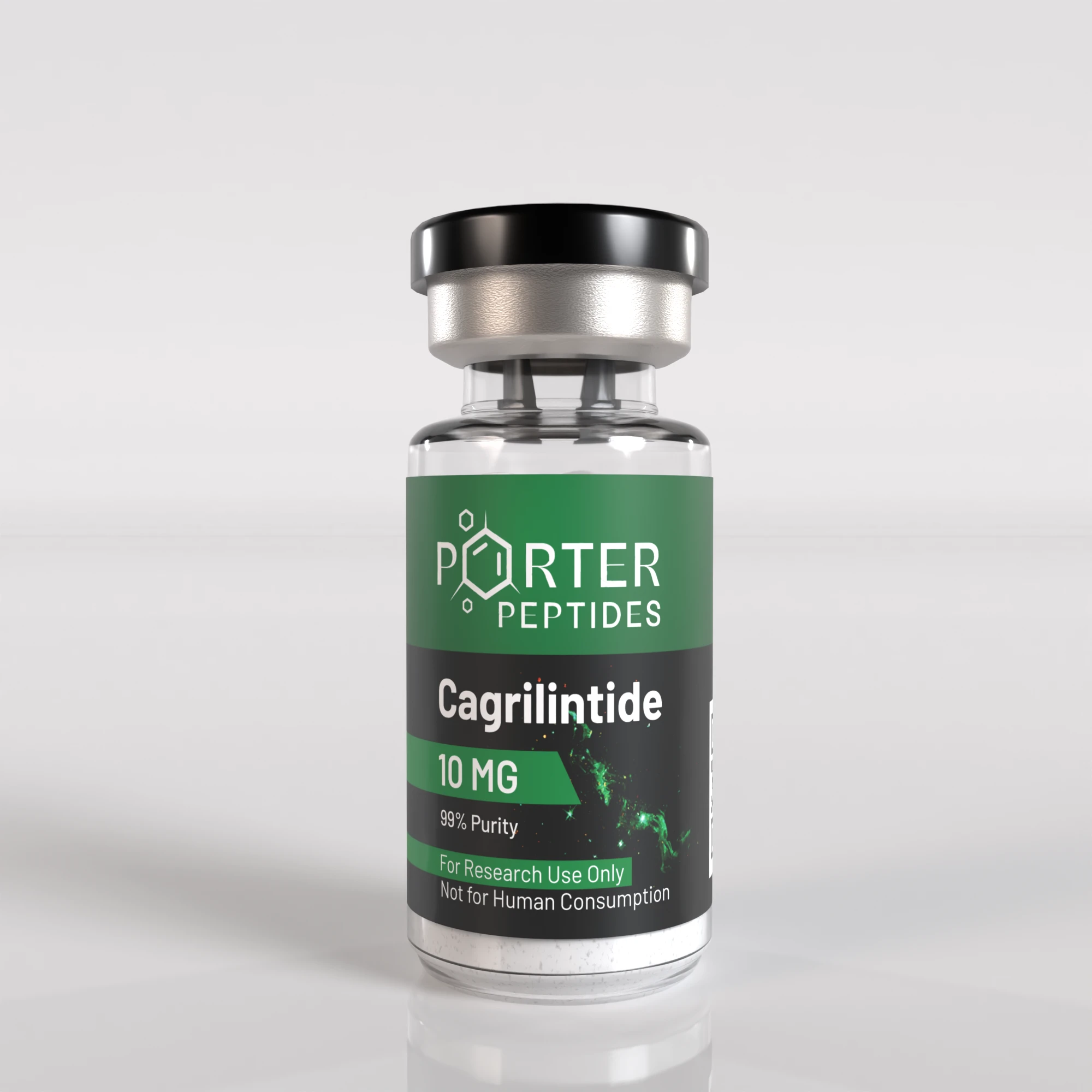
Cagrilintide has been evaluated in controlled experimental models
to investigate its potential effects on metabolic signaling pathways,
adaptive biological communication systems, intracellular activity,
and peptide-mediated response mechanisms. Research studies commonly
focus on appetite-related signaling activity, metabolic communication
pathways, and adaptive physiological responses within laboratory environments.
$200.00
Availability: 35 in stock
Availability: 35 in stock
Cagrilintide is a synthetic peptide formulation developed exclusively
for academic, laboratory, and institutional research applications
under strict regulatory oversight. This product is intended solely
for scientific investigation and analytical use within controlled
research environments. Below is detailed information regarding its
composition, relevance, and experimental research context.
Cagrilintide is an amylin analogue that has been extensively studied
in laboratory and preclinical research for its interaction with
metabolic signaling pathways, peptide-mediated biological communication
systems, and adaptive physiological activity. Experimental investigations
have explored its role in appetite-regulation signaling mechanisms,
energy-balance pathways, and intracellular communication systems
under controlled laboratory conditions.
Cagrilintide has been evaluated in controlled experimental models
to investigate its potential effects on metabolic signaling pathways,
adaptive biological communication systems, intracellular activity,
and peptide-mediated response mechanisms. Research studies commonly
focus on appetite-related signaling activity, metabolic communication
pathways, and adaptive physiological responses within laboratory environments.
This peptide is intended strictly for research purposes and must only
be handled by qualified professionals operating within properly controlled
laboratory environments. Users are responsible for ensuring compliance
with all applicable local, regional, and national laws governing peptide
handling, storage, transportation, and research use.
Due to its biological activity, Cagrilintide requires appropriate
containment measures, sterile handling procedures, and adherence to
laboratory safety standards to minimize unintended exposure.
Research institutions and laboratories utilizing Cagrilintide should
comply with all applicable biosafety protocols,
Institutional Review Board (IRB) standards,
and ethical research guidelines where applicable.
This product is not intended for diagnostic, therapeutic,
veterinary, or consumer use.
For research use only. Not for human or animal consumption.
| Size | 10MG, 5MG |
|---|




Reviews
There are no reviews yet.