PORTER KITS
LOADED PORTER KITS
$50
Get a loaded Porter Kit for the November sale price of $50.
SHOP KITSWorld Diabetes Day research special and our November Specials — explore both offers below.
Research Special — explore three selected products and save on eligible mg vials.
Shop available mg vial options of RT3, SM1 or TP2.
Enter DD1113 in the coupon field at checkout.
Your eligible items receive the promotional discount.
Valid November 13, 2026 only. Applies exclusively to all mg vial options of RT3, SM1 and TP2. Enter DD1113 at checkout. Subject to product availability.
Save on loaded Porter Kits and select 10mg products, or unlock a free Polished by Porter serum.
Get a loaded Porter Kit for the November sale price of $50.
SHOP KITS →Save 15% on both qualifying 10mg products.
Spend $100 or more on Polished products and receive a free Hyaluronic Acid Serum.
SHOP POLISHED →Offers are subject to availability. The free serum is added automatically when the qualifying Polished subtotal reaches $100.
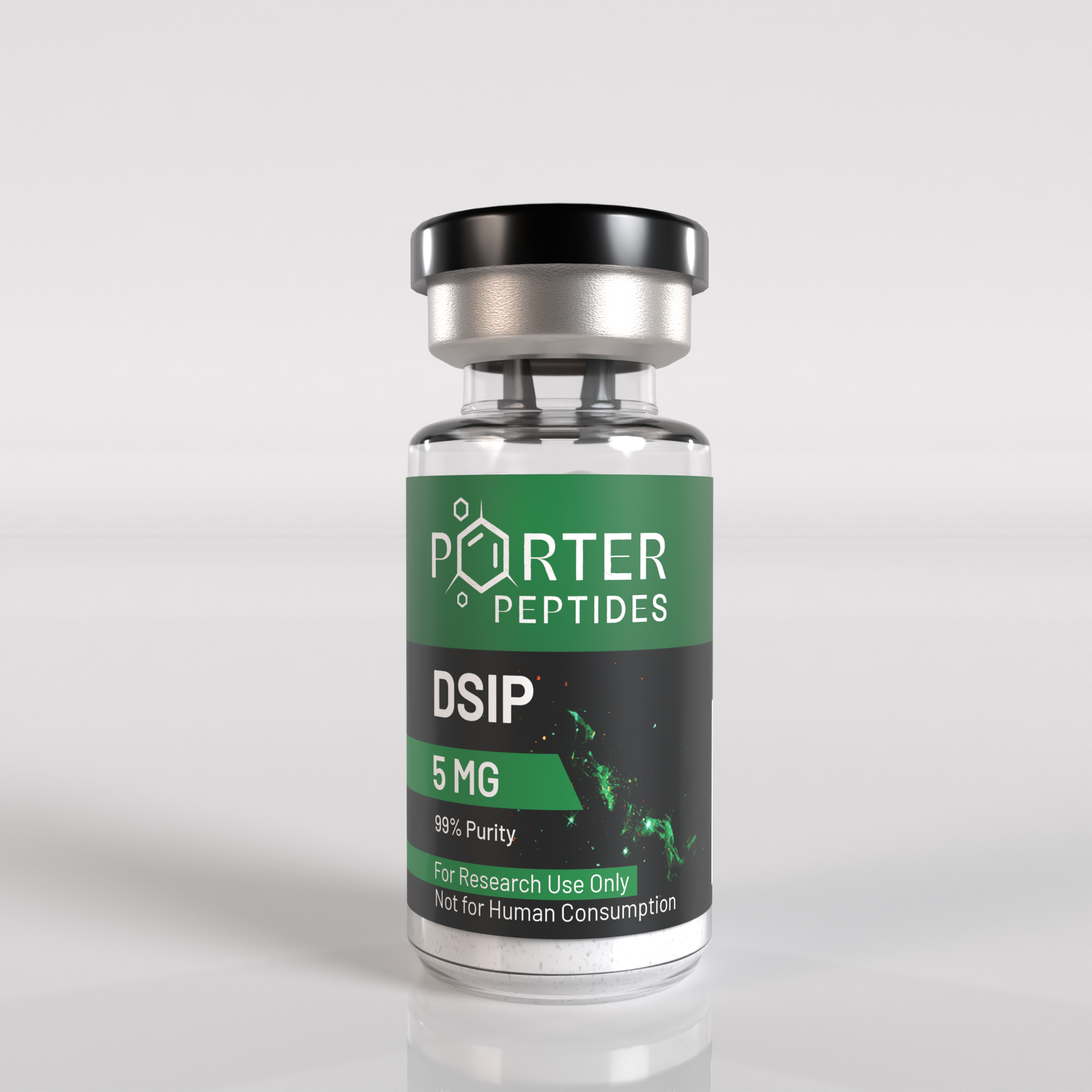
DSIP 5MG is a research-use-only peptide designed for laboratory applications. This compound has been utilized in studies exploring its potential effects on sleep regulation. Please note that this product is intended solely for scientific research and non-commercial use. For research use only.
$45.00
Availability: 27 in stock
Availability: 27 in stock
Decapeptide-3 (DSIP) is a synthetic decapeptide derived from the decapeptide hormone decapeptide-3, which is naturally found in the brain and plays a role in neuroendocrine regulation. This product is provided for research purposes only and is not intended for human or animal consumption.
Decapeptide-3 (DSIP) is a synthetic analogue of the brain-derived hormone decapeptide-3, originally identified for its potential effects on neuroendocrine signaling and circadian rhythm regulation. Research on DSIP has primarily explored its interaction with specific receptors in the hypothalamus and pituitary gland, areas crucial for hormonal balance and sleep regulation.
DSIP has been studied in preclinical models for its potential roles in modulating sleep-wake cycles, stress responses, and neuroendocrine functions. Early findings suggest that DSIP may influence the release of certain neurohormones and participate in regulatory pathways that affect behavioral and physiological states. However, its precise mechanisms and therapeutic applications remain under active investigation.
This product is intended solely for use in accredited research institutions and laboratories adhering to established guidelines for the handling of synthetic peptides. Users must follow all applicable regulations governing experimental research, including proper documentation, disposal, and storage protocols. Safety measures, such as appropriate handling techniques and disposal procedures, should be strictly observed to minimize potential risks.
For research use only. Not for human or animal consumption.




Reviews
There are no reviews yet.