PORTER KITS
LOADED PORTER KITS
$50
Get a loaded Porter Kit for the November sale price of $50.
SHOP KITSWorld Diabetes Day research special and our November Specials — explore both offers below.
Research Special — explore three selected products and save on eligible mg vials.
Shop available mg vial options of RT3, SM1 or TP2.
Enter DD1113 in the coupon field at checkout.
Your eligible items receive the promotional discount.
Valid November 13, 2026 only. Applies exclusively to all mg vial options of RT3, SM1 and TP2. Enter DD1113 at checkout. Subject to product availability.
Save on loaded Porter Kits and select 10mg products, or unlock a free Polished by Porter serum.
Get a loaded Porter Kit for the November sale price of $50.
SHOP KITS →Save 15% on both qualifying 10mg products.
Spend $100 or more on Polished products and receive a free Hyaluronic Acid Serum.
SHOP POLISHED →Offers are subject to availability. The free serum is added automatically when the qualifying Polished subtotal reaches $100.
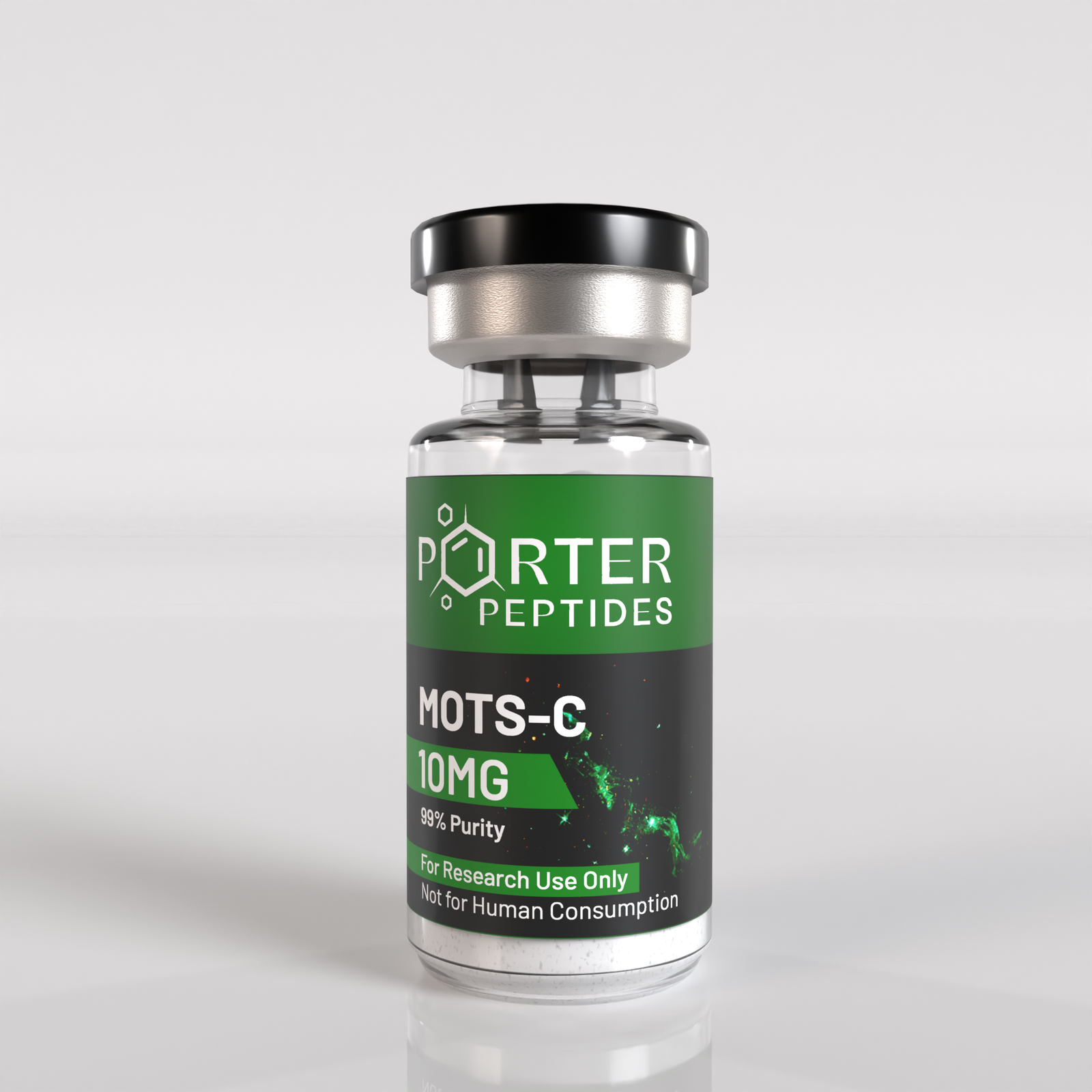
MOTS-C is a research-use-only peptide derived from mitochondrial transcripts, currently studied for its potential role in cellular metabolism and bioenergetics research. For research use only. Not for human or veterinary application.
$65.00 – $220.00Price range: $65.00 through $220.00
Mitochondrial-derived peptides, such as MOTS-C, have garnered increasing interest in the scientific community for their potential implications in mitochondrial function, metabolic regulation, and cellular homeostasis. This research-use-only peptide is derived from mitochondrial transcripts and is being investigated for its role in exploring cellular mechanisms beyond traditional protein-coding genes.
MOTS-C (Mitochondrially-encoded Open Reading Frame Small C peptide) is a novel class of peptide derived from the open reading frame (ORF) of mitochondrial transcripts. Initially identified in yeast and subsequently in mammals, research suggests that MOTS-C may influence mitochondrial biogenesis, energy metabolism, and stress response pathways. Unlike traditional peptide hormones or growth factors, MOTS-C is a non-coding RNA-derived peptide that has been studied for its potential to modulate cellular signaling without altering protein-coding sequences.
Studies investigating MOTS-C have primarily focused on its role in mitochondrial dynamics, oxidative metabolism, and the response to metabolic stressors. Early findings in animal models indicate that MOTS-C may enhance mitochondrial respiration, improve fatty acid oxidation, and potentially exert neuroprotective effects under conditions of metabolic stress. However, further investigations are required to elucidate its precise mechanisms of action and functional significance in vivo. Due to its nascent exploration, research protocols involving MOTS-C are still evolving within academic and pharmaceutical research contexts.
This peptide is intended for use solely within academic research, pharmaceutical development, or specialized industrial applications. Administration of MOTS-C, or any peptide, in human or animal subjects is strictly prohibited for therapeutic, cosmetic, or diagnostic purposes. The safety, toxicity, and efficacy of MOTS-C in any context outside of controlled research settings have not been established. Research institutions should follow established protocols, guidelines, and regulatory requirements applicable to their specific use. Unauthorized distribution or use constitutes a violation of research ethics and applicable laws.
For research use only. Not for human or animal consumption.
| Size | 10MG, 20MG, 40MG |
|---|





Reviews
There are no reviews yet.