15% OFF
TP2
10MG Vial
SHOP TP2 →
International Men’s Day research bundle, selected-product savings, and November Specials.
Two exclusive research offers: a specially curated four-piece bundle and additional savings on six selected research products.
Four research essentials in one exclusive collection.
November 19, 2026 only. No promo code required.
Explore six selected research products and collections included in the International Men's Day promotion.
Offers valid November 19, 2026 only. Discount applies to eligible products only. No promo code required. Subject to product availability.
Save on loaded Porter Kits and select 10mg products, or unlock a free Polished by Porter serum.
Get a loaded Porter Kit for the November sale price of $50.
SHOP KITS →Save 15% on both qualifying 10mg products.
Spend $100 or more on Polished products and receive a free Hyaluronic Acid Serum.
SHOP POLISHED →Offers are subject to availability. The free serum is added automatically when the qualifying Polished subtotal reaches $100.
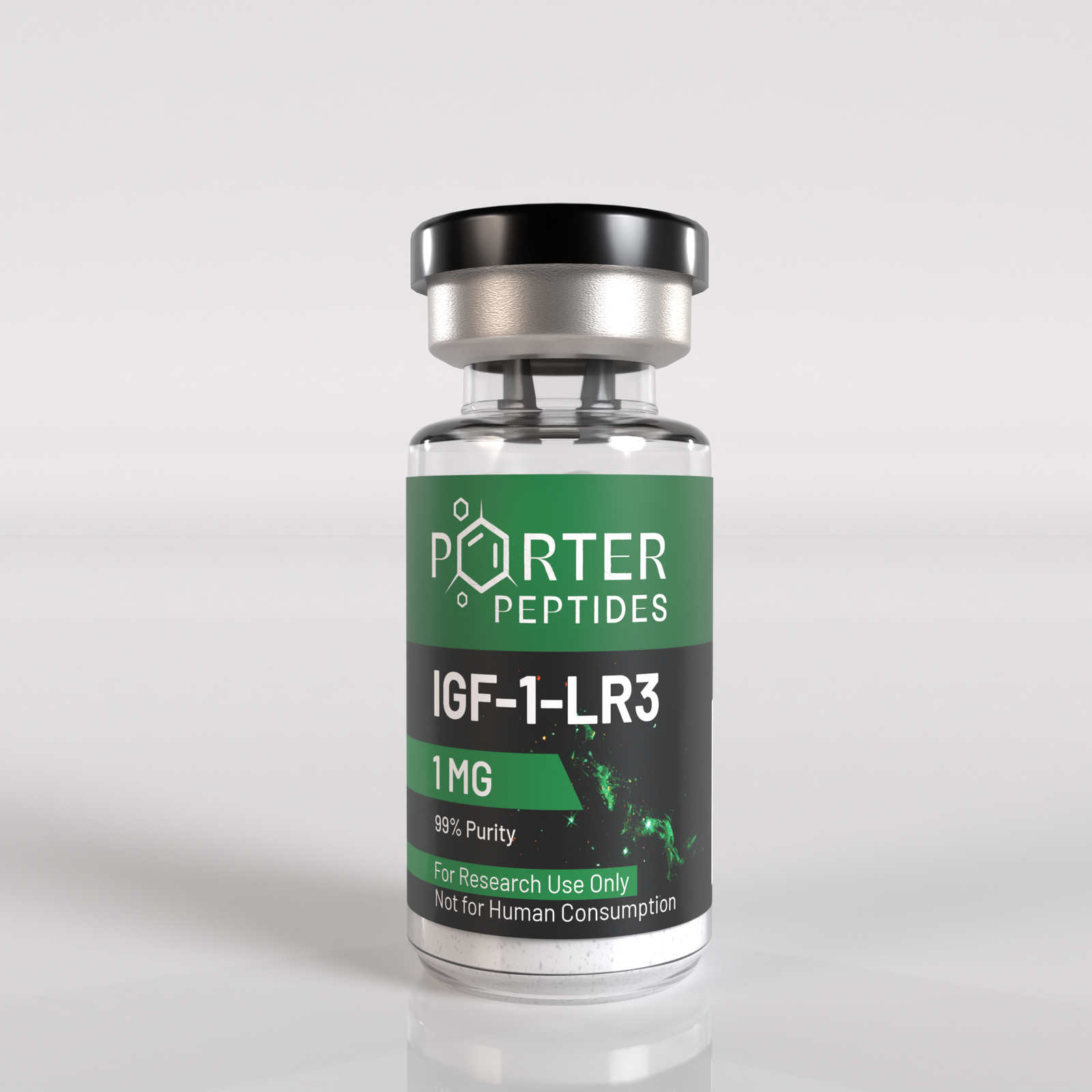
IGF-1 LR3 is a recombinant peptide designed for advanced research applications in laboratory contexts. This product provides a modified form of insulin-like growth factor-1 (IGF-1), specifically the LR3 variant, suitable for molecular, biochemical, and cellular studies. For research use only. Always follow proper biosafety protocols when handling peptide materials in a controlled laboratory environment.
$200.00
Availability: 44 in stock
Availability: 44 in stock
IGF-1 LR3 is a synthetic variant of Insulin-like Growth Factor 1 (IGF-1) designed for research applications. This peptide is structurally modified to enhance its stability and biological activity, making it a valuable tool in studies focused on growth factors, cellular signaling, and molecular biology. Due to its potential effects on tissue repair, muscle growth, and metabolic processes, IGF-1 LR3 is often utilized in academic and biochemical research environments.
IGF-1 LR3 belongs to the IGF family, which plays a crucial role in regulating growth, differentiation, and survival of cells. The LR3 modification includes a specific amino acid sequence (Leu-Arg-Gly-Asp) at the C-terminal that enhances peptide stability and improves its ability to interact with IGF-1 receptors. This variant has been extensively studied for its potential effects on skeletal muscle regeneration, wound healing, and aging-related cellular processes.
IGF-1 LR3 is primarily used in preclinical research settings to investigate mechanisms of action related to growth, metabolism, and tissue regeneration. Its modified structure allows for more precise experimental applications, including in vitro studies, animal models, and cellular assays. Researchers often employ this peptide to study its impact on protein synthesis, extracellular matrix remodeling, and cellular responses to stress or injury.
It is essential to note that IGF-1 LR3 is not intended for human or animal consumption. All research involving this peptide must adhere to strict protocols to ensure safety and compliance with regulatory guidelines.
The use of IGF-1 LR3 must be conducted under the supervision of qualified researchers adhering to established laboratory protocols. Potential risks include unintended biological responses, allergic reactions, or misinterpretation of experimental outcomes. Researchers are advised to consult relevant scientific literature and regulatory guidelines specific to their institution before use.
For research use only. Not for human or animal consumption.



Reviews
There are no reviews yet.