15% OFF
TP2
10MG Vial
SHOP TP2 →

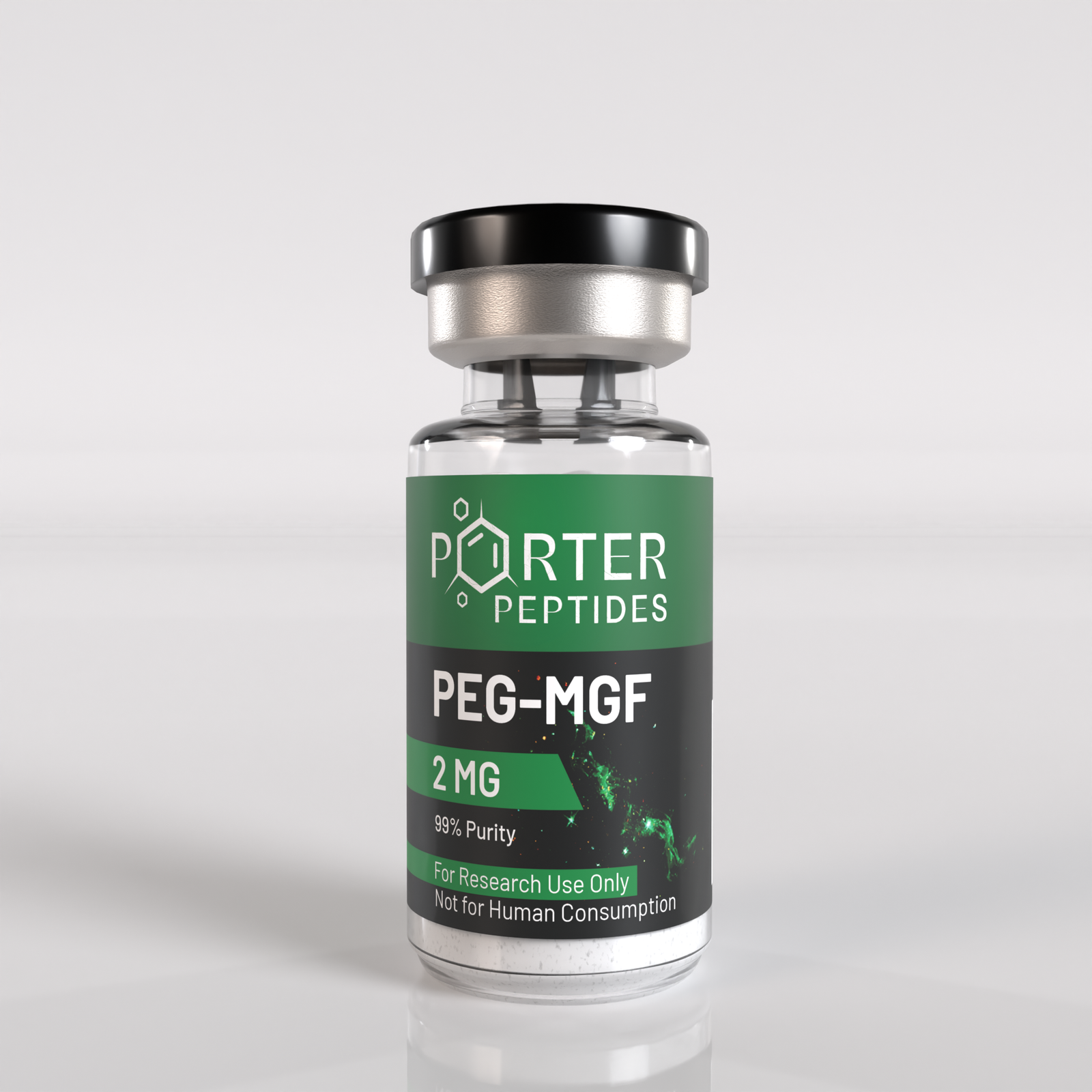
PEG-MGF, or Mechanically-Generated Growth Factor, is a peptide derived from the myostatin pathway. This peptide plays a critical role in the research community studying muscle regeneration, aging, and cellular signaling. Below is a detailed overview of its scientific context and applications within a research setting.
PEG-MGF is synthesized in response to mechanical stress on skeletal muscle tissue, such as exercise. It is an isoform of growth differentiation factor 5 (GDF5) and is believed to promote muscle growth, regeneration, and recovery. PEG-MGF has been extensively studied for its potential therapeutic effects in animal models, including enhancing muscle fiber regeneration, improving skeletal muscle function, and exploring applications in anti-aging research.
PEG-MGF research primarily focuses on its role in mediating muscle adaptations to mechanical stimuli. Early studies demonstrated that PEG-MGF treatment in animal models could enhance muscle growth and repair mechanisms, particularly in conditions involving muscle degeneration or atrophy. Ongoing investigations continue to explore its potential mechanisms, including its influence on satellite cell activation and extracellular matrix remodeling.
This 2 mg research sample of PEG-MGF is intended for academic and scientific inquiry only. Researchers utilizing this product should adhere to strict experimental protocols, proper documentation, and ethical guidelines for animal or cell culture studies.
For research use only. Not for human or animal consumption.




Reviews
There are no reviews yet.