15% OFF
TP2
10MG Vial
SHOP TP2 →
International Men’s Day research bundle, selected-product savings, and November Specials.
Two exclusive research offers: a specially curated four-piece bundle and additional savings on six selected research products.
Four research essentials in one exclusive collection.
November 19, 2026 only. No promo code required.
Explore six selected research products and collections included in the International Men's Day promotion.
Offers valid November 19, 2026 only. Discount applies to eligible products only. No promo code required. Subject to product availability.
Save on loaded Porter Kits and select 10mg products, or unlock a free Polished by Porter serum.
Get a loaded Porter Kit for the November sale price of $50.
SHOP KITS →Save 15% on both qualifying 10mg products.
Spend $100 or more on Polished products and receive a free Hyaluronic Acid Serum.
SHOP POLISHED →Offers are subject to availability. The free serum is added automatically when the qualifying Polished subtotal reaches $100.
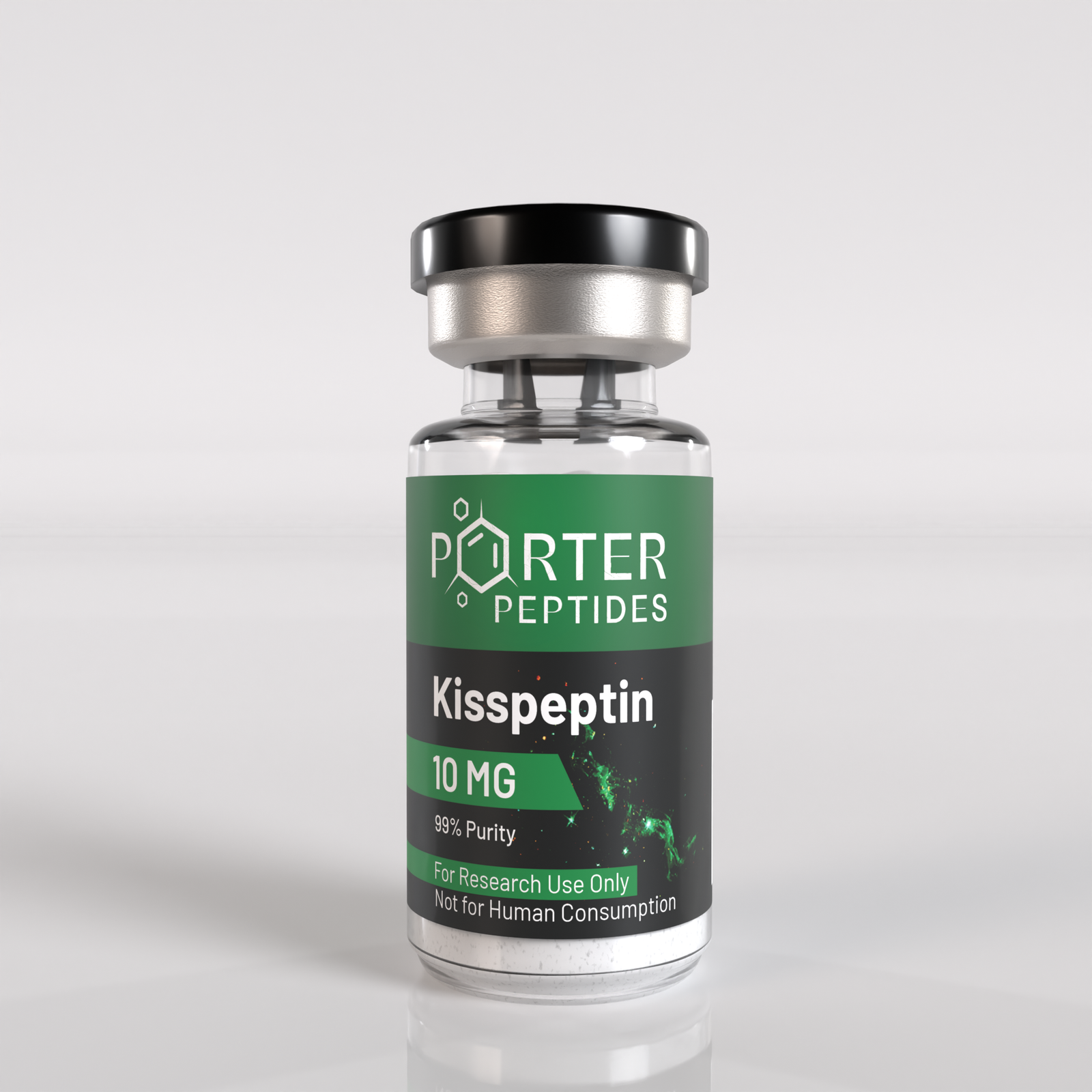
Kisspeptin is a research-use-only peptide derived from the kiss-1 gene, involved in regulating reproductive function by modulating gonadotropin-releasing hormone (GnRH) secretion. Structurally similar to GnRH, it functions as a key neurotransmitter in reproductive signaling pathways. For research use only.
$80.00
Kisspeptin is a potent neuropeptide derived from the kiss-1 gene, originally identified for its role in reproductive regulation. Within the research community, it serves as a critical tool for studying hypothalamic-pituitary-gonadal (HPG) axis function, reproductive behavior, and neuroendocrine signaling pathways. Kisspeptin influences GnRH (gonadotropin-releasing hormone) secretion, making it a key regulator of gonadal hormone production and reproductive timing. Its applications span basic neuroscience research to investigations into reproductive disorders, though it remains strictly confined to experimental settings.
Kisspeptin was first isolated from the kiss-1 gene in 2001, initially characterized through its inhibitory effects on GnRH secretion in non-pregnant females. Subsequent studies demonstrated its dual role: suppressing GnRH release during pregnancy to inhibit ovulation, while stimulating GnRH during the follicular phase to promote luteinizing hormone (LH) surges essential for ovulation. This dual function highlights its pivotal position in the reproductive neuroendocrine circuit. Research has expanded to include kisspeptin analogs designed to modulate GnRH release for potential therapeutic development in fertility disorders, though clinical translation remains exploratory.
Kisspeptin’s molecular structure (27–29 amino acids) and its receptor (GPR54) interactions define its specificity within the brain. In vitro studies have utilized recombinant kisspeptin to dissect its signaling cascades, including activation of Gαq/11 pathways and subsequent intracellular calcium mobilization. In vivo models employ kisspeptin administration in rodents to investigate its effects on GnRH pulsatility, sex hormone fluctuations, and reproductive competence. These studies underscore its utility as a pharmacological probe for neuroendocrine regulation and reproductive physiology.
Kisspeptin is provided for research use only. It is exclusively intended for academic or industrial research applications under the supervision of qualified personnel in institutions adhering to regulatory guidelines. This material is not authorized for human or animal consumption, including dietary supplements, pharmaceutical formulations, or therapeutic applications. Administering kisspeptin outside controlled experimental settings poses significant risks, including unpredictable physiological responses, neurotoxic effects, and unintended reproductive consequences. Always conduct experiments in accordance with institutional review boards, ethical guidelines, and applicable local/regional regulations.
For research use only. Not for human or animal consumption.
| Size | 10MG |
|---|



Reviews
There are no reviews yet.